

When a police officer, firefighter, paramedic, or military member experiences a critical incident — a shooting, a mass casualty event, a traumatic rescue that goes wrong — the professional support system around them mobilizes. Peer support. Critical incident debriefs. Employee assistance. Clinical referrals.
And then, at some point, the question arises: how do we help this person get back to doing the job?
The answer, increasingly, involves exposure-based approaches — carefully structured experiences that help the individual process what happened and rebuild their capacity to function in the environments that triggered the trauma. This is well-established in the clinical literature. What is less well understood is the role that scenario delivery partners like DGS Immersive play in that process — and why the distinction between clinical leadership and operational support matters so much.
This post is intended to clarify exactly that.
What Exposure-Based Recovery Actually Involves
Exposure therapy is one of the most well-researched approaches to treating post-traumatic stress disorder. At its core, it involves helping a person gradually and safely confront the memories, situations, or stimuli associated with their trauma — reducing the fear and avoidance responses that have developed over time.
For first responders and military personnel, this often means returning — in some controlled form — to environments, sounds, sights, or interpersonal dynamics that resemble what they experienced. A paramedic who froze at a pediatric trauma call. A police officer who cannot respond to mental health calls without dissociating. A soldier whose body goes into crisis in chaotic, multi-stimulus environments.
The clinical frameworks governing this work — including Prolonged Exposure (PE), Cognitive Processing Therapy (CPT), and EMDR — are well validated by decades of research. For a comprehensive overview, see the Canadian PTSD Alliance treatment guidelines and the Government of Canada’s Action Plan on Post-Traumatic Stress Injuries.
What these frameworks require, particularly as recovery progresses, is real-world application — a bridge between the therapy room and the operational environment. That bridge is where clinician-directed scenario support comes in.
The Role of the Clinician — And Why It Cannot Be Delegated
Before going any further, it is important to be explicit about something: clinician-directed scenario support is not a service that DGS Immersive initiates, designs, or delivers independently.
The clinician leads. We execute. This is not a marketing distinction — it is the structural principle that makes this work safe, ethical, and therapeutically sound.
The psychologist, psychiatrist, registered social worker, occupational therapist, or other regulated health professional responsible for a patient’s care is the one who determines:
- Whether exposure-based scenarios are clinically appropriate for this individual at this stage of their recovery
- What the nature, intensity, and sequencing of those exposures should be
- What the therapeutic goals of each scenario are
- How the patient should be supported before, during, and after each session
- When the process should pause, adapt, or conclude
DGS Immersive’s role is to take that clinical direction and translate it into a realistic, carefully constructed scenario environment. We bring the physical and operational expertise — the role players, the environment design, the moulage effects, the safety protocols. The clinician brings the therapeutic framework and the ongoing assessment of patient wellbeing.
Neither role is sufficient without the other. A realistic scenario without clinical direction is just stress. Clinical direction without operational realism may fail to produce the meaningful exposure the treatment requires. Together, they create the conditions for genuine progress.
Why This Model Protects Everyone Involved
Clinicians who work with first responders often understand, intuitively, the value of realistic exposure environments. What they may not have access to is a trusted partner who can design and execute those environments safely and professionally.
Equally, organizations supporting a team member’s recovery may want to help — but without clinical direction, even well-intentioned efforts can be counterproductive. Premature exposure, poorly sequenced scenarios, or environments that inadvertently re-traumatize rather than heal can set recovery back significantly.
Research published by the Frontiers in Organizational Psychology on PTSD among Ontario public safety personnel found that over 44% of Canadian public safety workers show symptoms of at least one mental health disorder — and that untreated psychological injury is the primary driver of long-term disability, early retirement, and operational impairment. The cost of getting recovery wrong is not abstract. It is measured in years of lost service, escalating disability claims, and the human cost of a person who was not given the right support at the right time.
The clinician-directed model addresses this risk directly. By keeping clinical judgment at the centre of every decision, it ensures that scenario support is always in service of the patient’s recovery — never ahead of it.
What a Clinician-Directed Scenario Might Look Like in Practice
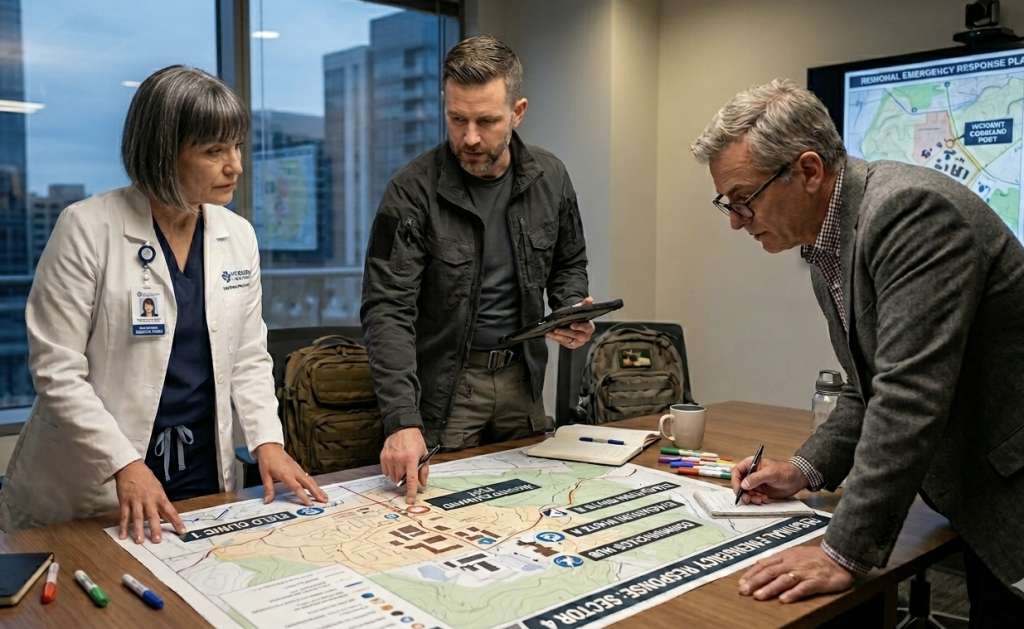
Every engagement is different, because every patient and every trauma is different. But to make this concrete, here is one illustrative example of how the process might unfold.
A paramedic with PTSD related to a mass casualty event has been working with their psychologist for several months. They have stabilized significantly and they are processing effectively in session. The next therapeutic step, in the clinician’s judgment, is a controlled exposure to elements of the operational environment — not a full return to duty, but a structured encounter with stimuli associated with their trauma.
The clinician contacts DGS Immersive and describes the therapeutic objectives: the patient needs to experience a low-intensity emergency response environment with professional role players, realistic but not overwhelming auditory and visual elements, and a controlled exit point if the experience becomes dysregulating.
DGS designs a scenario to those specifications. Each scenario is designed to include increasing levels of intensity as specified by the clinician and in accordance with the patient’s readiness. Together, the patient and their recovery team determine the pace at which each iteration of the scenario progresses.
Our team briefs the role players on the patient’s context and the therapeutic goals — without disclosing clinical details unnecessarily. Safety protocols are established. The clinician is present or immediately available. The scenario unfolds. The clinician debriefs with the patient afterward, and that debrief informs the next step in treatment.
DGS Immersive does not participate in the debrief. We do not assess the patient’s response. We do not make recommendations about future exposures. Our role ends when the scenario ends. What happens next is the clinician’s domain.
The question we ask ourselves before every engagement is simple: are we in service of this person’s recovery plan, or are we running ahead of it? If the answer is ever the latter, we stop.
Who This Model Is Designed For
Clinician-directed scenario support is most relevant in the following contexts:
- First responders — police officers, firefighters, paramedics, dispatchers — who have experienced a critical incident and are engaged in formal clinical treatment
- Military personnel navigating operational stress injuries, including combat-related PTSD, who are under the care of a regulated mental health professional
- Individuals approaching a return-to-duty assessment who require structured, graduated exposure to their operational environment as part of their recovery
- Teams or units that have collectively experienced a traumatic event and whose treating clinician has determined that group-based scenario support would be beneficial
If you are a clinician working with clients in any of these categories and are considering whether scenario-based support might complement your treatment approach, we welcome the conversation. We are not here to tell you what your patients need. We are here to help you give it to them.
A Note on Transparency and Scope of Practice
DGS Immersive is not a clinical service. We are not therapists, counsellors, psychologists, or registered health professionals of any kind. DGS staff do not diagnose, assess, treat, or provide clinical support.
We are operational scenario designers and delivery specialists with deep experience in realistic, immersive environments for military, law enforcement, fire, and emergency medical training. That experience, applied under clinical direction, creates something genuinely useful for the recovery process.
The distinction matters — both ethically and practically. Public Safety Canada’s national framework on PTSD is explicit that post-traumatic stress injuries in first responders require multi-disciplinary support. DGS Immersive is one part of that ecosystem — specifically, the part that can build the environments clinical treatment sometimes requires.
We take this responsibility seriously. Every engagement involving recovery support is approached with the same rigour, care, and commitment to the individual’s wellbeing that we bring to all our work — because in this context, the stakes of getting it wrong are too high to approach it any other way.
If You’re a Clinician Reading This
We know that your first obligation is to your patient. Ours is to support you in meeting it.
If you are working with a first responder or military member and believe that structured, realistic scenario exposure might serve their recovery — at whatever stage makes clinical sense — we would welcome a conversation. There is no obligation and no sales process. Just a straightforward discussion about whether what we do can be useful to what you’re trying to achieve.
You can reach us through our contact page. We will respond promptly and with discretion.
Sources & Further Reading
- Public Safety Canada — An Action Plan on Post-Traumatic Stress Injuries (2019)
- Frontiers in Organizational Psychology — WSIB Mental Stress Claims, Ontario Public Safety Personnel 2017–2021
- WSIB Ontario — Post-Traumatic Stress Disorder in First Responders and Other Designated Workers
- Health Infobase Canada — PTSD Lost Time Claims (Government of Canada)
- McGill Journal of Law and Health — Mental Health on the Front-line: Legal Barriers to Psychological Injury Compensation for Public Safety Personnel
- Myomnia Health — The Cost of Psychological Injury in First Responders
- American Psychological Association — What Is Exposure Therapy?
- Canadian Psychological Association — PTSD Treatment Guidelines